

Granular didn’t just bring a strategy—they integrated with us and built the growth system alongside the team from day one.
Client
dashmoto®
Expertise
- Digital Strategy & Budgeting
- SEO Consulting & Implementation
- Content Strategy & Optimization
- Digital Advertising Consulting, Budget Management & Optimization
- Outreach Strategy & Execution
Year
2024 - Present

dashmoto® is a San Francisco-based premium mobility scooter brand founded by Kim Ng after a spinal cord injury from a motorcycle accident. The company’s flagship product, the dash 3, is a 26-pound carbon fiber scooter designed to combine the performance and aesthetics of personal electric vehicles with the functional needs of mobility users. Foldable and available in multiple configurations, dashmoto® positions itself not as a medical device but as a lifestyle product that redefines mobility.
The brand has secured partnerships with Atlassian Williams Racing and has been featured across major media. We have been dashmoto®’s digital growth partner from the beginning, engaged before the product reached the market to build the digital strategy, infrastructure, and go-to-market execution that would turn a category-defining product into a scalable business.
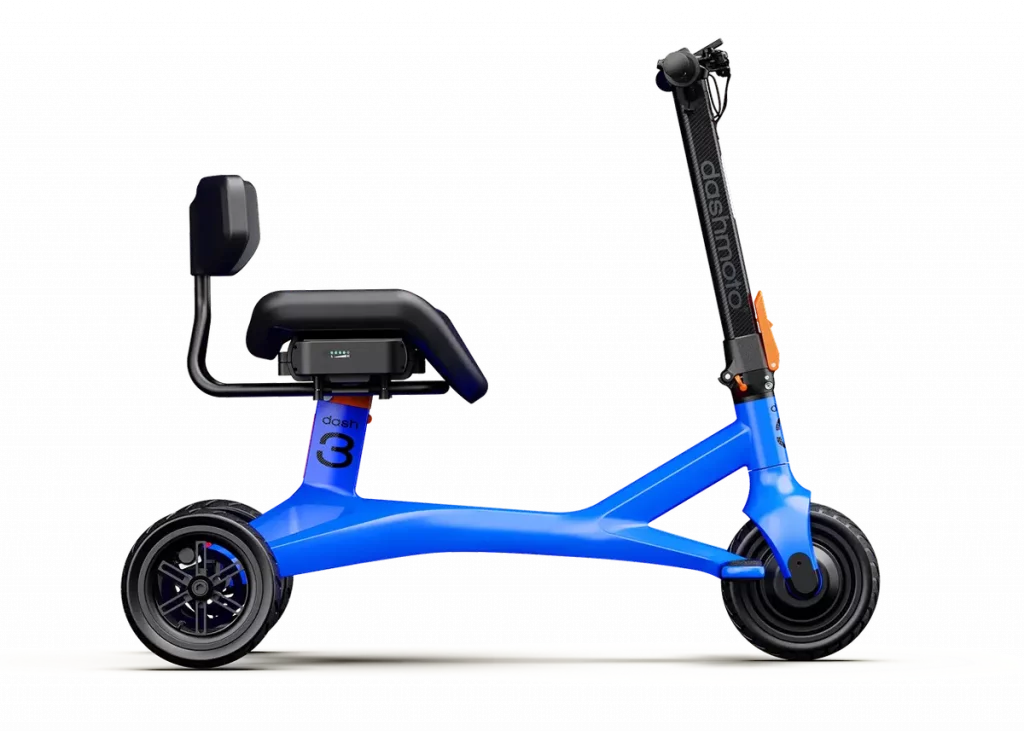
dash 3
Client words
Granular didn’t just bring a strategy—they integrated with us and built the growth system alongside the team from day one.
They owned execution across the full stack: paid, SEO/AI visibility, content, and off-site. These are competing priorities in practice, and they managed the trade-offs well, keeping focus where it mattered.
Planning discipline and data control were strong throughout. Their data models have been particularly useful—informing decisions and tying efforts back to measurable outcomes.
Kim Ng, Founder

Challenges
Building a digital marketing system from zero
dashmoto® was launching a premium product into the market with a strong brand identity and a category-defining product but little digital marketing infrastructure. There was no analytics setup, no SEO foundation, no advertising architecture, no content strategy, and no outreach pipeline. Everything needed to be built from scratch and built right the first time, because the window for establishing market presence around a product launch is narrow. The task was to design and operationalize a complete performance-driven marketing system with defined growth pillars, shared KPIs, budget governance, and unified reporting in parallel with the product going to market.
Establishing organic visibility in a niche market
Mobility scooters sit at the intersection of assistive technology, personal electric vehicles, and lifestyle products- a positioning that creates unusual SEO challenges. dashmoto® needed to build visibility against established medical device retailers, large-scale Amazon listings, and generic review aggregators, while simultaneously carving out search presence for non-traditional queries that reflect their lifestyle-oriented brand positioning. As a new domain with no organic history, there was no baseline traffic, no ranking positions, and no topical authority to build on.
Creating a conversion-ready web presence
The website needed to serve as both the brand’s primary storytelling platform and its direct sales channel. dashmoto® is a high-consideration, high-price-point product. The customer journey from discovery to purchase involves significant research, comparison, and trust-building. The site architecture, content, and product page needed to be built from the start to serve both organic search visibility and conversion, including resolving technical choices around JavaScript-rendered content that would otherwise limit crawlability and AI readability.
Building advertising infrastructure without established benchmarks
With no historical performance data, no existing conversion tracking, and no established customer acquisition costs to benchmark against, the advertising function had to be built iteratively, testing campaign structures, creative formats, audience segments, and landing page variations without the luxury of baseline metrics. Every decision was a first decision.
Defining the content strategy for a category that doesn’t fully exist
dashmoto® isn’t a traditional mobility scooter. The content strategy needed to establish and own a positioning that sits between medical mobility, personal electric vehicles, and lifestyle accessories, a category the market hadn’t fully defined yet. This meant building content architecture without clear keyword benchmarks or established competitive patterns to follow.
No visibility into AI-powered search environments
As AI answer engines like ChatGPT, Perplexity, and Google’s AI Overviews increasingly shape how consumers discover products, dashmoto® had no presence and no measurement framework in place. With a product launch as the starting point, this wasn’t about tracking an existing presence, it was about building one from nothing and establishing the measurement systems to guide it.

Solution
Digital strategy and growth pillar definition
We designed the complete digital marketing framework from the ground up, defining six growth pillars: Web & SEO, Advertising, Content, Outreach, Influencers, and Budget Management. Each pillar was assigned clear KPIs, ownership, and a reporting cadence. We built a unified performance dashboard tracking all pillars both individually and in aggregate, and established budget governance logic to ensure capital efficiency and measurable ROI from day one. This gave dashmoto® the operational clarity and decision-making infrastructure that most startups only develop years into their growth, established here at launch.
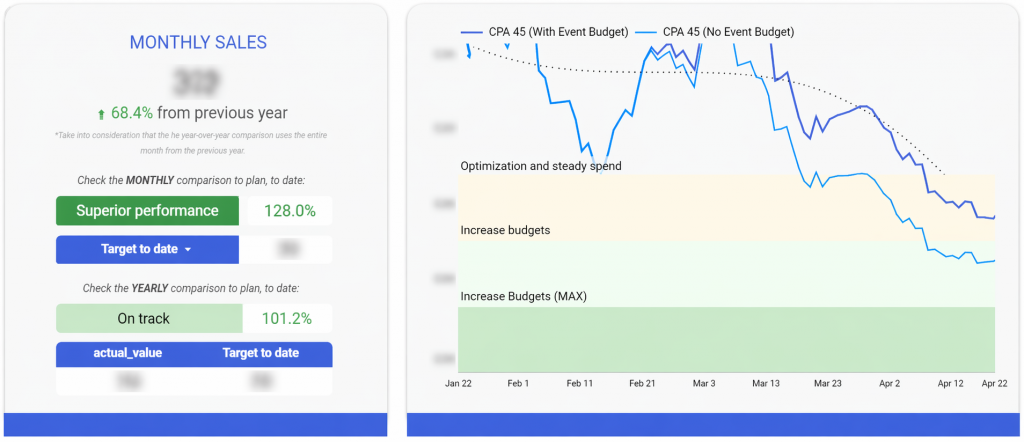
Controlling Dashboard – KPI overview
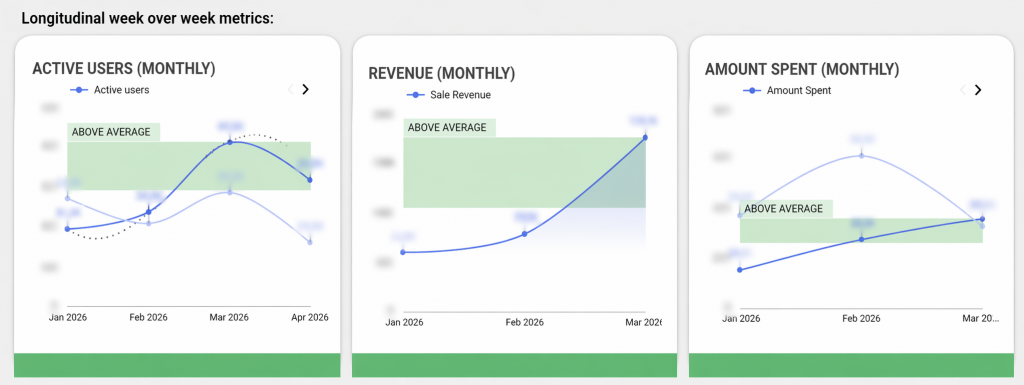
Controlling Dashboard – Week over week metrics
Content architecture for an emerging category
We developed a content strategy built on pillar pages, feeder content, and systematic internal linking logic, designed to capture search demand across the full customer journey, from awareness-stage queries about mobility solutions through comparison and purchase-intent searches. Because dashmoto® occupies an emerging category between medical mobility and lifestyle products, content was developed to establish and own that positioning in search rather than compete within existing category definitions.
Advertising built iteratively from zero
With no historical benchmarks to guide initial decisions, we built the advertising function through structured iteration. We introduced agile campaign structures combining senior specialist oversight with automated scaling, implemented formal testing protocols across creative formats, audience segments, and landing page variations, and evolved from initial volume-focused acquisition toward capital efficiency as data accumulated. The systematic approach was designed to generate reliable benchmarks quickly while avoiding the common startup trap of burning budget before understanding what works.
Structured outreach and authority building
We developed a multi-layered outreach strategy designed to build domain authority and long-term brand equity simultaneously. This combined paid media placements in strategically selected publications (generating secondary organic backlinks, YouTube reviews, and indirect LLM mentions), organic submissions to industry directories and review platforms across the mobility, EV, and disability sectors, community participation in industry discussions, primarily Reddit, through thoughtful engagement rather than link-building, and research and proposals for future strategic retail partnerships and industry collaborations.
AI brand visibility tracking
We implemented a measurement system tracking dashmoto®’s presence across major AI answer engines – monitoring brand mentions, citation frequency, and which domains are most cited within AI-generated responses. This insight directly informed outreach prioritization: rather than pursuing backlinks purely for domain authority, we could target publishers that AI systems most frequently reference, compounding the value of each placement across both traditional and AI-driven search.

Results
- +160% increase in website visits from Google Organic Search (Jan 2025 vs Dec 2025)
- +150% increase in brand-query impressions in Google Organic Search (Jan 2025 vs Dec 2025)
- 50–70% reduction in cost-per-acquisition within the first six months of advertising optimization
- ~30 → ~311 referring domain growth, significantly strengthening domain authority and competitive positioning
- ~2% -> ~4% AI answer engine brand visibility within 3 months (early-stage growth — presence in large LLM ecosystems remains limited but is now measurable and actively growing)