
Client
GameS
Expertise
- Research & Audit
- Cross-Channel Strategy
- Budget Management
- Audience Segmentation
- Performance Monitoring
Year
2025 - Present

GameS is a Serbian gaming retail chain founded in 2007, with eleven stores across the country and a certified online shop that has carried the e-trustmark quality seal since 2016. The platform covers everything from consoles and games to gaming peripherals, collectible figures, merchandise, and board games, serving both casual and dedicated gamers. With a growing product catalogue, GameS needed a structured advertising strategy to scale revenue beyond its existing limits and improve return on ad spend across both Google Ads and Meta.
Challenges
Imbalanced budget allocation across platforms and campaigns
On Google Ads, a disproportionate share of the budget was allocated to branded campaigns, which, while efficient in terms of CPC and conversion rate, limited the account’s ability to reach new audiences. The balance between brand and non-brand investment was not aligned with the growth objectives, leaving significant untapped revenue potential in non-branded search.
On Meta ads, the budget was split roughly 50/50 between traffic and sales campaigns, which meant a large portion of the spend was focused on driving visits rather than conversions. This limited the account’s ability to fully optimize toward revenue and maximize ROAS.
Poorly structured Google Search campaigns
Search campaigns lacked a clear thematic structure, with ad groups mixing unrelated keywords rather than being organized by topic or intent. This led to overlapping targeting across campaigns, keyword cannibalisation, inefficient quality scores, and diluted ad relevance, all of which negatively impacted both performance and cost efficiency.
Meta Ads campaign optimization focused only on conversion volume
Meta campaigns were previously optimized primarily for maximum conversion volume, which limited the ability to maximize the value of conversions and overall ROAS. This approach prioritized quantity over the actual revenue generated.
Neglected high-revenue product categories
Several product categories with strong revenue potential were either underrepresented or entirely absent from the campaign structure. Without dedicated coverage for these categories, the account was leaving high-intent traffic and the revenue that comes with it to competitors.
Underutilized Performance Max campaigns on Google
Performance Max campaigns were present in the account but not configured or leveraged to their full potential. Without proper asset groups, audience signals, and campaign-level goals, the campaigns were unable to effectively utilize Google’s automation to capture incremental conversions across its full inventory.
Absence of organized data and product feeds
The Google Ads account lacked well-structured, dynamic and page feeds, limiting the ability to run dynamic search ads and personalized remarketing at scale. Without clean, organized feed data, campaign automation had no reliable foundation to work from, restricting both reach and personalization capabilities.
On Meta Ads, product feeds and dynamic ads were also not being fully leveraged, limiting automation and scalable personalization across campaigns.
Unclear account structure and naming on Meta Ads
The account lacked a clear campaign structure and naming convention, with no distinction between always-on and flight campaigns. Most campaigns were created around vendor promotions and short-term actions, which resulted in limited always-on activity and inconsistent product/product category coverage.

Solution
Keyword and Landing Page Alignment
We audited and revised the keyword strategy to ensure full alignment between search terms, user intent, and ad messaging. Landing pages were mapped to corresponding ad groups to create a consistent and relevant user journey from search query to conversion. This alignment improved Quality Scores, reduced wasted spend, and drove stronger conversion rates.
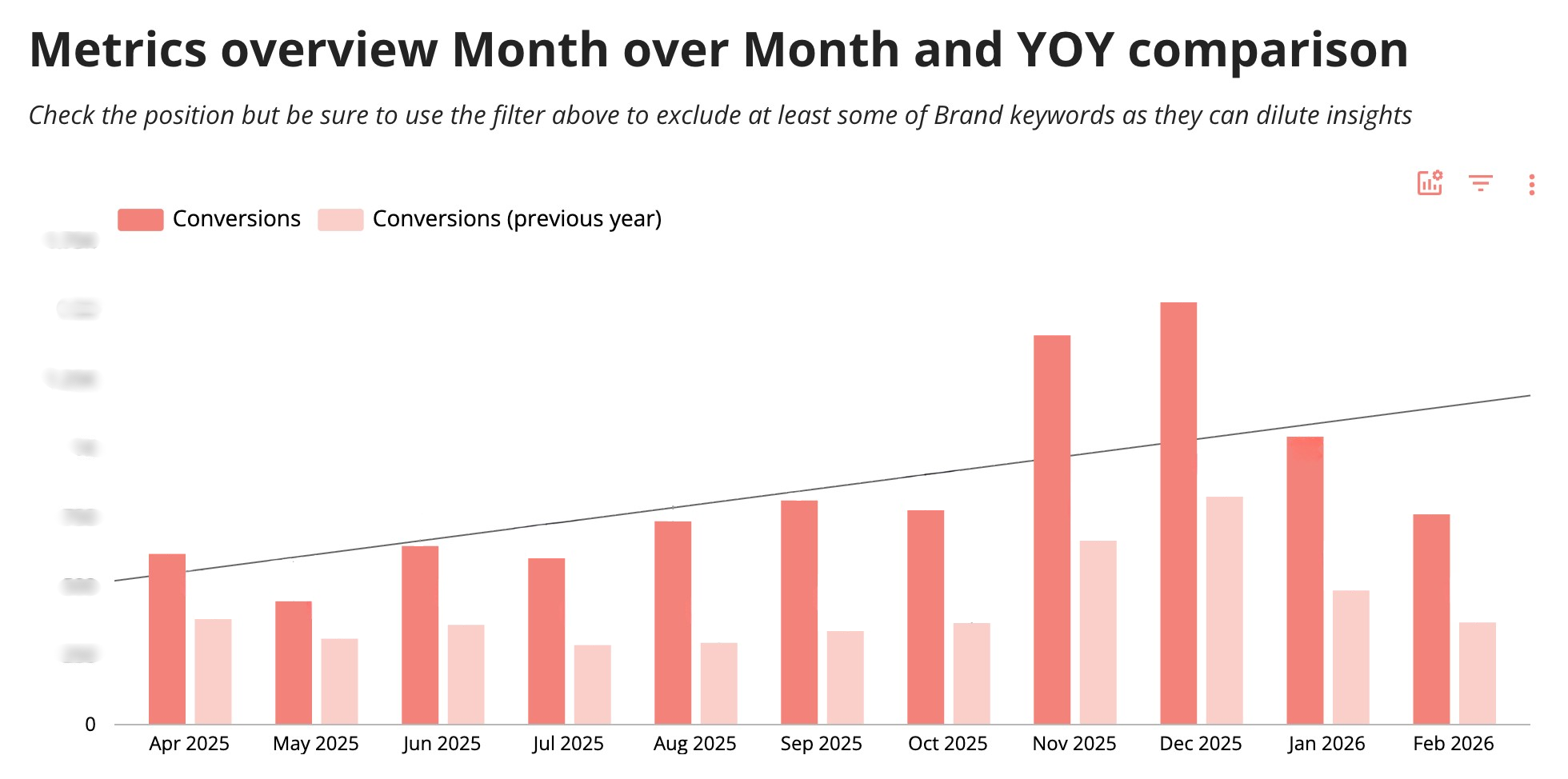
Google Ads – Monthly conversions growth
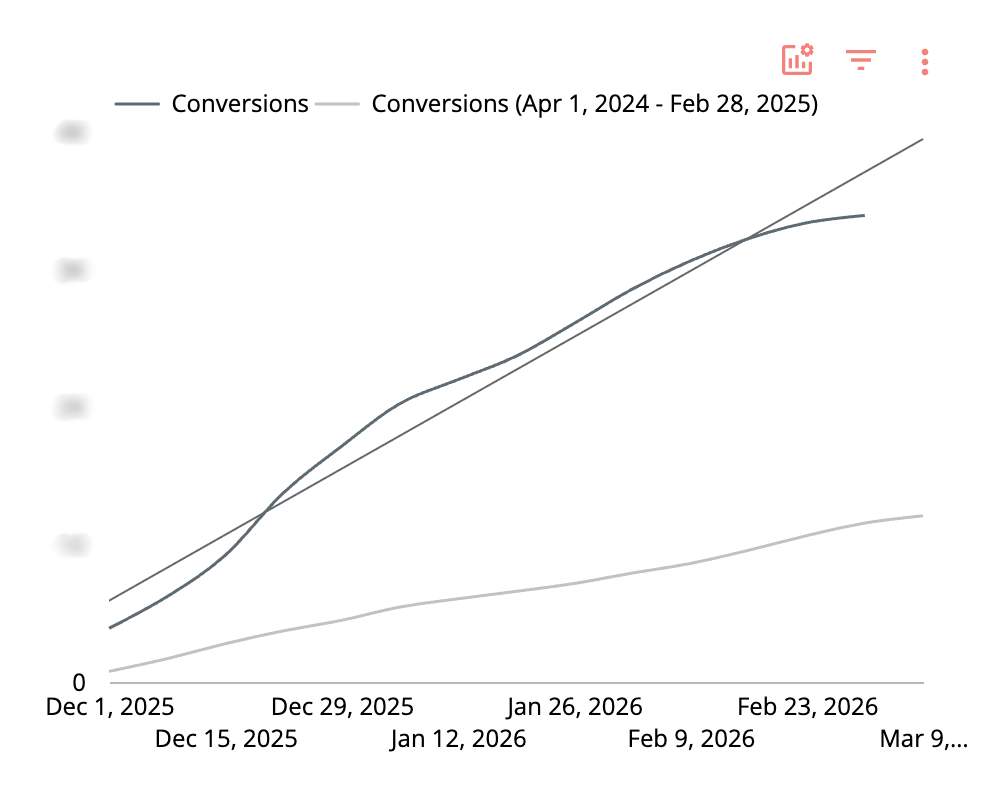
Google Ads – Conversions – cumulative growth
Rebalancing brand and non-brand budget allocation on Google Ads
We conducted a thorough analysis of budget distribution across brand and non-brand campaigns and restructured investment to better reflect the store’s growth goals. By reducing over-reliance on branded traffic and systematically increasing non-brand campaign budgets in high-potential categories, we created a more balanced paid search strategy capable of reaching new audiences while maintaining branded campaign profitability.
Full Google Search and Meta campaigns restructuring
We rebuilt the search campaign architecture from the ground up, organizing ad groups around clear themes and search intent. Overlapping keywords were identified and eliminated, and a clean campaign hierarchy was established to prevent cannibalisation and ensure each campaign had a distinct, well-defined role within the account. This improved Quality Scores, ad relevance, and overall account efficiency. Meta Campaigns were restructured to create dedicated campaigns for specific vendors, alongside the introduction of always-on campaigns to ensure continuous product promotion and more stable performance.
Activating neglected high-revenue product categories
We identified product categories with strong revenue potential that had been underrepresented in the Google Ads account and built dedicated campaign structures around them. Each category received tailored keyword coverage, targeted ad copy, and appropriate budget allocation, ensuring high-intent traffic in these segments was captured rather than ceded to competitors.
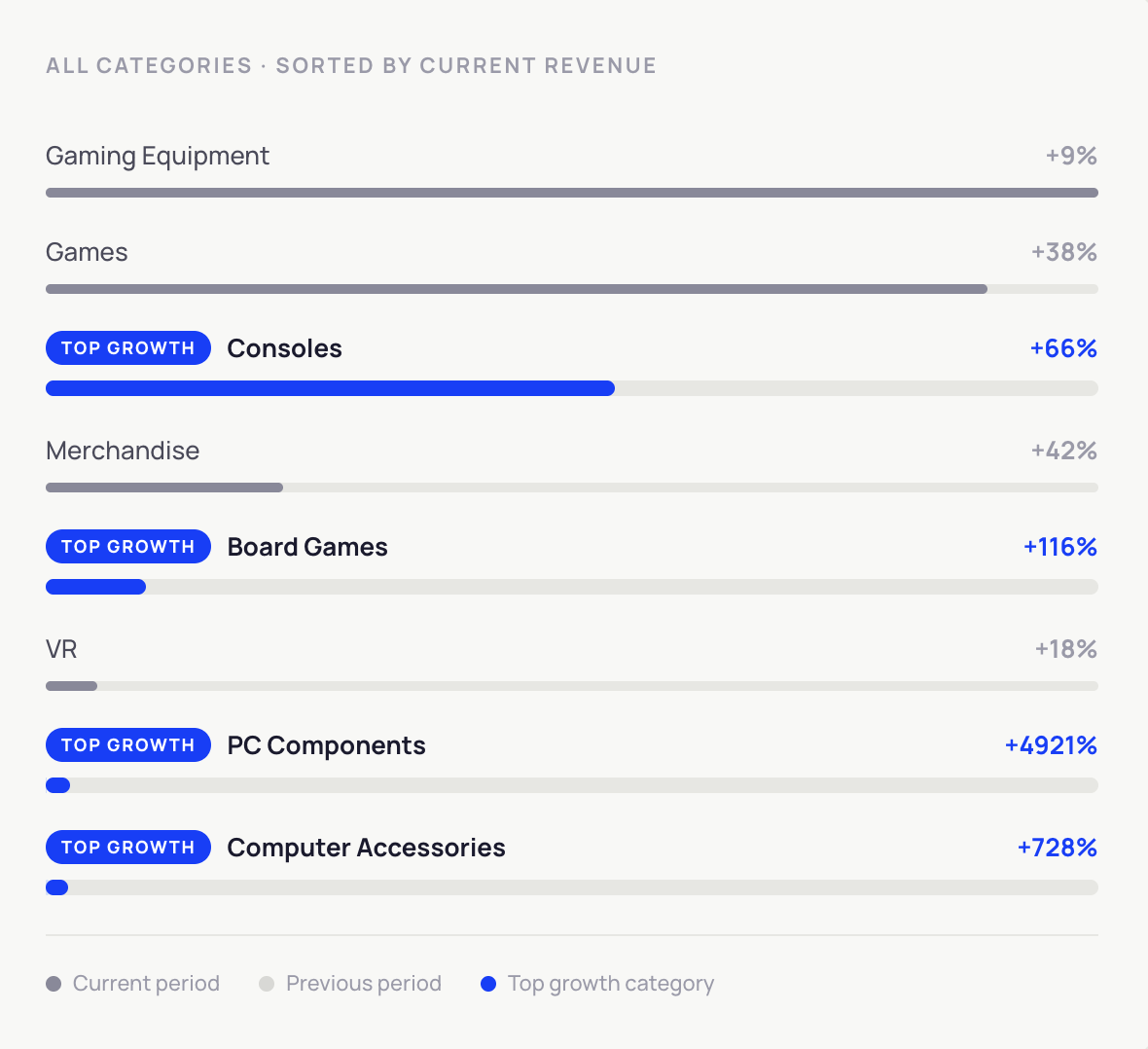
Product categories revenue growth
Performance Max expansion for vendor campaigns
Rather than applying Performance Max broadly across the Google Ads account, we took a targeted approach: expanding Performance Max campaigns exclusively for promotional vendor campaigns, where specific brand partners and their products were the focus. This kept Performance Max clearly separated from always-on campaigns, avoiding overlap and ensuring that each vendor partner’s promotion had its own dedicated structure with the right assets and audience signals to perform effectively.
Data feed implementation and organization
Google Ads
We defined the required structure and provided detailed technical instructions to the development team for implementing both dynamic and page feeds. Clean, structured feed data enabled dynamic search ads to run at scale with accurate, relevant ad content, and provided the foundation for more personalized and efficient remarketing on display inventory.
Meta
To unlock full potential, feeds needed to be properly structured and categorized, with the addition of relevant custom parameters. This allowed for easier creation of targeted product sets and enabled prospecting and remarketing campaigns to focus specifically on promoting higher-value product categories.
Shifted focus to sales campaigns on Meta
In order to focus more on revenue generation, we shifted a larger share of the budget toward Sales campaigns, which allowed us to optimize more directly for conversions, improve ROAS, and drive higher online sales.
Testing value-based optimization on Meta
We started testing value-based optimization goals, allowing campaigns to optimize not only for the number of conversions but also for higher conversion value, to increase overall revenue and improve ROAS.

Results
- 233% total revenue growth across all paid channels (Y-O-Y)
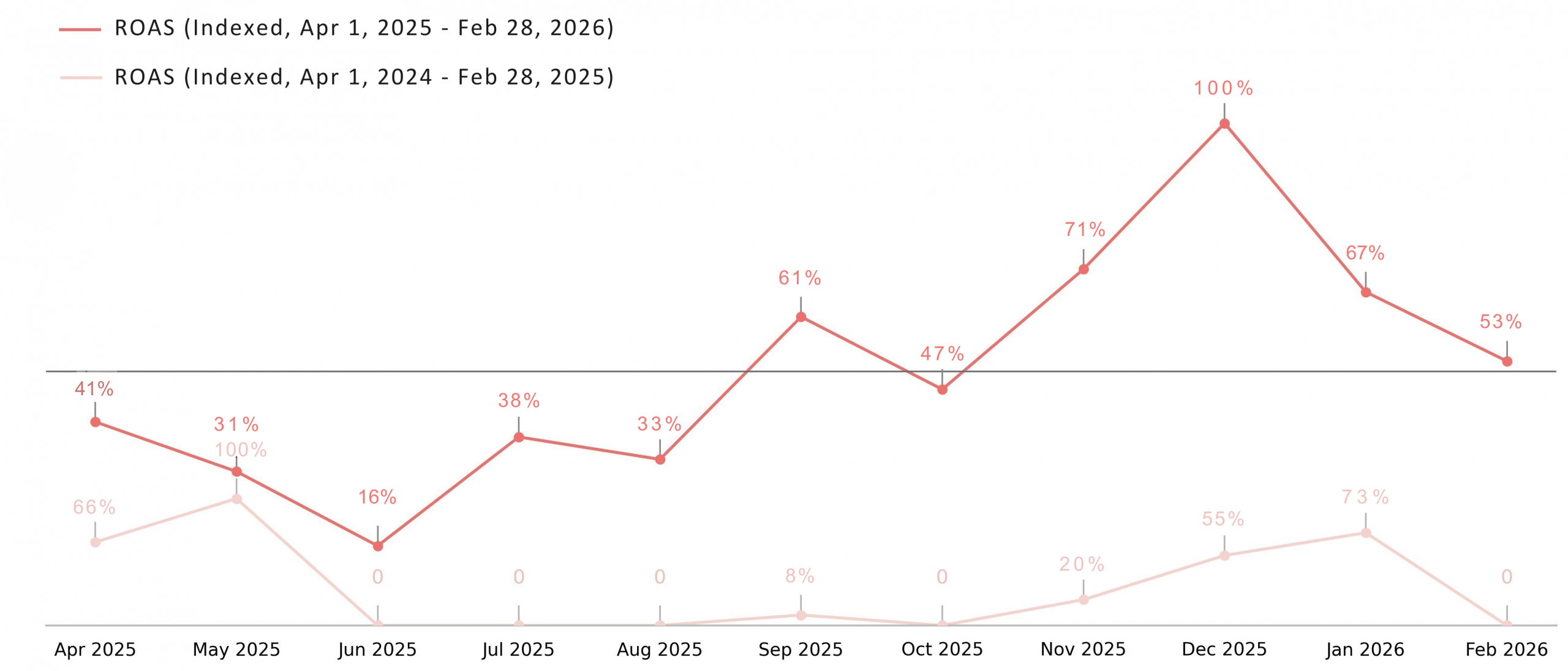
- 121% total ROAS improvement across all paid channels (Y-O-Y)
- 202% total purchase growth across all paid channels (Y-O-Y)